So I was chatting with a plant manager last month — guy’s been in cement for like 18 years — and he said something that genuinely stuck with me. He said, “we spend thousands on fuel optimization and completely ignore the hole in our system that’s undoing all of it.” He was talking about false air. And honestly? Same story everywhere.
False air is one of those things that doesn’t scream at you. It’s not a dramatic equipment failure or a number that shows up red on your dashboard. It just… leaks in quietly, messes with your thermal efficiency, and costs you money you didn’t even know you were losing. And the false air reduction ROI conversation doesn’t get nearly enough attention given how real those returns actually are.
What Even Is False Air and Why Should You Care
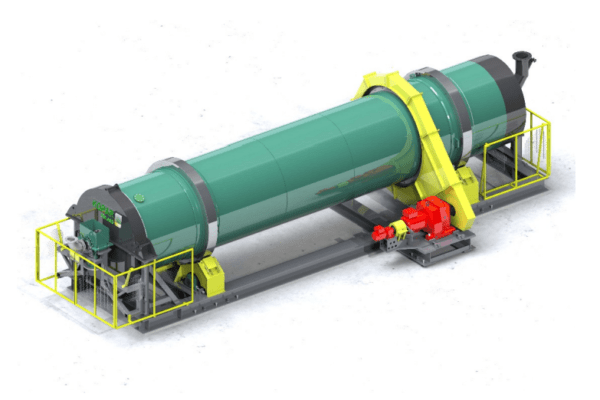
Okay so for anyone who’s slightly new to this — false air basically means unintended cold air infiltrating your kiln system. Not the air you’re controlling. Not combustion air. Just random leakage sneaking in through worn seals, gaps at joints, inspection doors, wherever it can find a way in. Rotary kilns are long, hot, and constantly moving, which means there’s a lot of opportunity for leakage, especially at the inlet and outlet seals.
Now here’s where it starts hurting your pocket. When cold air gets in, your system has to work harder to maintain temperature. The ID fan has to pull more. Your fuel consumption goes up. Your specific heat consumption climbs. And if you’re running a preheater or calciner, false air in those sections is especially brutal because it dilutes the gas temperature and messes with the whole thermal chain. One study I came across put infiltration losses in cement plants at anywhere between 10 to 30 percent of total thermal inefficiency. That’s not a rounding error.
The ROI Math Is Actually Pretty Compelling
People sometimes treat seal upgrades or false air reduction projects as a maintenance cost rather than an investment, which is the wrong frame entirely. Let me try to put it in simple terms. Imagine you have a leaky garden hose and you’re trying to water your plants. You keep turning up the tap pressure to compensate — using more water, wearing out the tap faster, and still getting uneven coverage. Fixing the leak doesn’t just save water. It saves the tap, saves time, and your plants actually do better. Kilns are the same idea, just with fire and a lot more money involved.
The actual numbers depend on plant size and current leakage levels, but plants that have done serious false air reduction work have reported fuel savings in the range of 3 to 8 percent, sometimes more. On a mid-sized cement kiln burning 50,000+ tons of coal equivalent per year, even a 5 percent saving is enormous. And that doesn’t even count the knock-on benefits — reduced fan power consumption, lower NOx in some cases, better clinker quality consistency.
Why It Often Gets Ignored
This is the part that genuinely frustrates me. Most plant teams know there’s leakage. They’ll measure it once, find a high value, nod sadly, and then get distracted by something more visible. Seal replacement sounds boring. It doesn’t have the drama of a new burner or a software upgrade.
There’s also a visibility problem. False air doesn’t trigger alarms usually. It’s slow. Gradual seal wear over months means you’re adjusting set points incrementally and not noticing the cumulative drift. I’ve seen plants where the operators have basically normalized high heat consumption because it happened slowly and nobody tracked it against a baseline.
Social media and industry forums actually have a fair amount of chatter about this — particularly on LinkedIn groups for cement professionals. The sentiment is usually something like “we did it finally and wish we did it sooner.” That’s a pattern. When people actually run the numbers post-project, the payback periods are often surprisingly short. Under two years in many cases. Sometimes under one.
What Actually Makes the Difference
The most meaningful interventions tend to be at the kiln inlet and outlet seals, since those are the highest movement zones and where wear accelerates fastest. Traditional labyrinth or leaf seal designs have limitations — they can handle some movement but degrade under the combined stress of axial and radial kiln movement. Newer designs that account for kiln dynamics tend to outperform significantly over the long run.
The other thing that matters and gets skipped is measurement. You can’t really manage what you’re not measuring. Oxygen analysis at multiple points — kiln inlet, riser duct, cyclone exit — gives you a leakage map that tells you where the air is actually coming in. Without that baseline you’re guessing. A lot of plants do one measurement, declare victory or defeat, and don’t revisit it.
One Thing I’ll Leave You With
I’m not saying false air is the only efficiency lever in a kiln system. Obviously it’s not. But it might be the most undervalued one relative to its actual impact. The teams I’ve seen take it seriously — treating seal maintenance as a continuous program rather than a break-fix task — consistently run tighter heat consumption numbers than plants that don’t.
It’s a bit like flossing. Everyone knows they should do it. Most people don’t do it enough. And when something goes wrong, the dentist always asks if you’ve been flossing. For kilns, false air is the flossing. Unglamorous, consistent, and quietly really important.